
The two countries also signed a 'Memorandum of Agreement regarding the Assignment of Liaison Officers', which will facilitate the posting of one military officer from each country with the military of the other.

The Modi government's flagship initiative 'Make in India' launched 10 years ago has helped the country boost exports, push investments and promote manufacturing. Under the initiative, launched on September 25, 2014, a series of measures have been taken by the government to boost local manufacturing. These initiatives include the rollout of production linked incentive (PLI) schemes for 14 sectors, easing foreign direct investment (FDI) norms, reducing compliance burden to improve business climate, all approvals through single window, and rolling out of the national logistics policy.

Wholesale inflation fell to a 3-month low of 2.04 per cent in July on decline in prices of food items especially vegetables, government data released on Wednesday showed. The decline in wholesale price index (WPI) based inflation in July came after it rose for four months in a row till June, when it was 3.36 per cent. It was (-) 1.23 per cent in July last year. In April wholesale inflation stood at 1.19 per cent.

Any government support or incentive to help exporters deal with high freight and insurance costs is unlikely.

Data localisation, an overarching theme across recent government policy proposals, has been a thorny issue with industry

Ecommerce firms will have it tough as govt turns down FDI proposal.

The government on Friday scrapped a minimum price threshold that it had set previously for exports of onion as it looked to pass on the benefit of international glut to Indian farmers. The government had previously fixed a $550 per tonne as the minimum export price (MEP), which essentially meant farmers could not sell their produce overseas at lower than this rate.
According to CAIT, e-commerce policy should take within its ambit not only foreign players but also domestic ones.

The government is planning to tweak its procurement policy to give a fillip to domestic manufacturing. The industry department has floated a proposal to raise the minimum local content requirement for public procurement for Class-I and -II suppliers from 50 per cent currently to 70 per cent, and 20 per cent as of now to 50 per cent, respectively.

India stares at the risk of an influx of Chinese products as US tariffs on a range of Chinese goods, including solar panels, electric vehicles, lithium-ion batteries, syringes, and steel, are set to take effect from September 27. With higher tariffs reducing China's access to the US market, there is concern that China may divert its exports to other markets, including India, which could lead to potential dumping of goods. This situation could challenge Indian industries, particularly in sectors where competition with Chinese products is already fierce.

Pratham Barot, CEO and co-founder, Zell Education, explains how specialised courses in finance can help you earn a cushy six-figure salary.
The final policy may be out only after formation of the new government, according to sources

The draft favoured up to 49 per cent foreign equity in inventory model in the case of 100 per cent made in India products sold through Indian management-controlled platforms with resident Indian founders/promoters.

The Centre on Monday proposed amendments to the Consumer Protection (E-Commerce) Rules, 2020 and sought public comments on banning mis-selling and fraudulent flash sale of goods and services on e-commerce platforms, and also on making registration of these entities mandatory with DPIIT. Ban on misleading users by manipulating search results, appointment of chief compliance officer and resident grievance officer are some of the other amendments being proposed. The Consumer Protection (E-Commerce) Rules, 2020 were first notified in July last year.
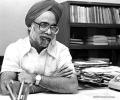
What stood out in his 15-year journey as a member of the political executive at the Centre was his glowing record as India's most successful and effective finance minister. Both as prime minister and finance minister, he understood the importance of gradualism, except when the economy or the polity was in a crisis.

'80% of start ups fail because they don't have a support system to help them in the very early phase.' 'It's not just an idea that takes an entrepreneur through the initial three years of journey.' 'What plays a definitive role in making a start-up successful is idea+team+capital+mentors+access to a larger ecosystem.'

Retailers claim online firms' predatory pricing strategy disrupting business

Sources within the Congress, including those who have been members of the teams that drafted its 2019 and 2024 Lok Sabha poll manifestos, said the Karnataka government decision lacked any empirical basis.

'The overwhelming evidence from various studies and reports indicates that the current work culture in the IT sector, characterised by excessive hours, has severe consequences for health, productivity, and overall quality of life.'

The actor-turned-politician has been allotted Panchayat Raj and Rural Development, Environment, Forests, and Science and Technology portfolios.

The ED had arrested Chatterjee, who is also the Trinamool Congress secretary-general, on July 23 in connection with its investigation into alleged irregularities in the recruitment drives by the School Service Commission.

The Centre is unlikely to offer new direct tax incentives for units operating in special economic zones (SEZs) and may instead allow the grandfathering of previous exemptions that such units were entitled to, according to proposed amendments to the SEZ Act, 2005, people aware of the matter said. The amendments, proposed by the commerce department, will soon be considered by the Cabinet for approval. This represents a departure from the department's earlier plan to introduce these changes through the Development Enterprises and Services Hubs (DESH) Bill, 2023, which faced strong criticism from the ministry of finance.
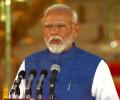
Here is the complete list of ministers in Modi 3.0 and their portfolios:

Even as the government today gave Saurabh Chandra, secretary, department of industrial policy and promotion (DIPP), the additional charge of secretary, Department of Commerce, Dinesh Kumar Mittal has emerged as the front runner for the post.

Following the disengagement, both sides will soon start the coordinated patrolling in their respective areas, sources added.

The government-backed Open Network for Digital Commerce (ONDC) is likely to start levying user charges in the current financial year.

The commerce and industry ministry has informed the Prime Minister's Office that the Bharti Group has conveyed to the government that its joint venture with Wal-Mart was in compliance with the existing FDI policy.

Work on a dozen decisions to start by next week.

Govt's e-commerce portal asks sellers to specify country origin of products. Now, the commerce & industry ministry has mandated that the Government e-Marketplace, which has seen Rs 55,048 crore worth of transactions till now, adopt this approach in the interest of creating an 'Aatmanirbhar Bharat'.

Three years and Rs 28,710 crore worth of transactions later, it has more than double the number of sellers than Flipkart.

The attached properties include 14 assets of Tuteja worth Rs 15.82 crore, 115 properties of Anwar Dhebar, the elder brother of Raipur Mayor and Congress leader Aijaz Dhebar, worth Rs 116.16 crore, properties of Vikash Agarwal alias Subbu worth Rs 1.54 crore and 33 properties of Arvind Singh worth Rs 12.99 crore, it said in a statement.

A year after a Hamas attack against Israel on October 7 and the ensuing Israeli invasion of the Gaza Strip, India's trade with most West Asian countries has largely escaped any major disruption, except with countries like Israel, Lebanon, and Jordan. However, repeated flare-ups of geopolitical tensions in the region continue to drive up shipping and logistics costs.

Eyeing $9 billion business opportunity in booming e-commerce business, India Post, which has the biggest network and serves the last mile, is boosting its infrastructure for real-time tracking of parcels through satellites using a new technology.

After 100% FDI, DIPP has put a condition an e-commerce entity will not be permitted more than 25% of sales through its marketplace from one vendor or their group companies
With the fate of the Development Enterprise and Services Hub (DESH) Bill in limbo, the commerce department is working towards tweaking some rules under the existing special economic zone (SEZ) law to allow use of unutilised spaces in IT/ITES for non-SEZ purposes. The move, when implemented, will free-up the land area that is not in demand through partial de-notification of certain floors or buildings, thereby allowing easier exit. "The department of commerce is discussing the matter with the revenue department before making changes in the Special Economic Zone Act, 2005," a person aware of the matter

The government is formulating guidelines on the use of ethylene oxide (ETO) in samples of spices for the domestic market and exports, people aware of the matter said, as it plans to step up efforts to make quality checks more stringent. ETO, a flammable, colourless gas, is typically used as a disinfectant. It is also used as a sterilising agent and an insecticide to reduce microbial contamination in spices. However, its use is considered carcinogenic, beyond permissible limits.

Of the Rs 1.97 trillion that the government intends to spend on all 14 production-linked incentive (PLI) schemes, around Rs 41,000 crore remains unutilised as of now, according to a senior government official. This means that 80 per cent of the total allocated amount, or Rs 1.56 trillion, will be used to pay incentives to companies eligible to claim benefits over the next few years. The unutilised amount/savings result from undersubscription, lukewarm responses in the case of schemes such as textile, as well as a reduction in the allocation of schemes.

After the government's online monitoring system for the import of electronic hardware items went live on November 1, inbound shipments of laptops and tablets slipped in November to a nine-month low at $225 million, contracting 17.15 per cent year-on-year. This decline was primarily driven by reduced imports from Singapore (down 43.7 per cent), Hong Kong (down 27.4 per cent), and China (down 14 per cent), according to the data released by the commerce department. China accounts for approximately 83 per cent of such imports.

Nirmala Sitharaman on Wednesday assumed charge as the Finance and Corporate Affairs Minister for the second consecutive term and is slated to soon present the final Budget for FY '25 that is going to set the tone for the Modi 3.0 government's priorities and direction for Viksit Bharat. Upon her reaching the North Block office, Sitharaman was greeted by Finance Secretary T V Somanathan and other top officials. Minister of State for Finance Pankaj Chaudhary was also present. Chaudhary assumed charge on Tuesday evening.
Ajit Balakrishnan offers a thinking man's guide to e-commerce controversies.
 © 2026 Rediff.com - Advertise with us - Disclaimer - Privacy Policy - Sitemap - Feedback - About us - Terms of use - Grievances